
What Customers Look for Before Choosing a Local Business
Choosing a local business is about more than just price. Customers compare reviews, photos, websites, contact details, and trust signals before making a decision. Learn the key factors that influence customer confidence and discover practical ways to improve your online presence, build trust, and attract more local customers.
Introduction
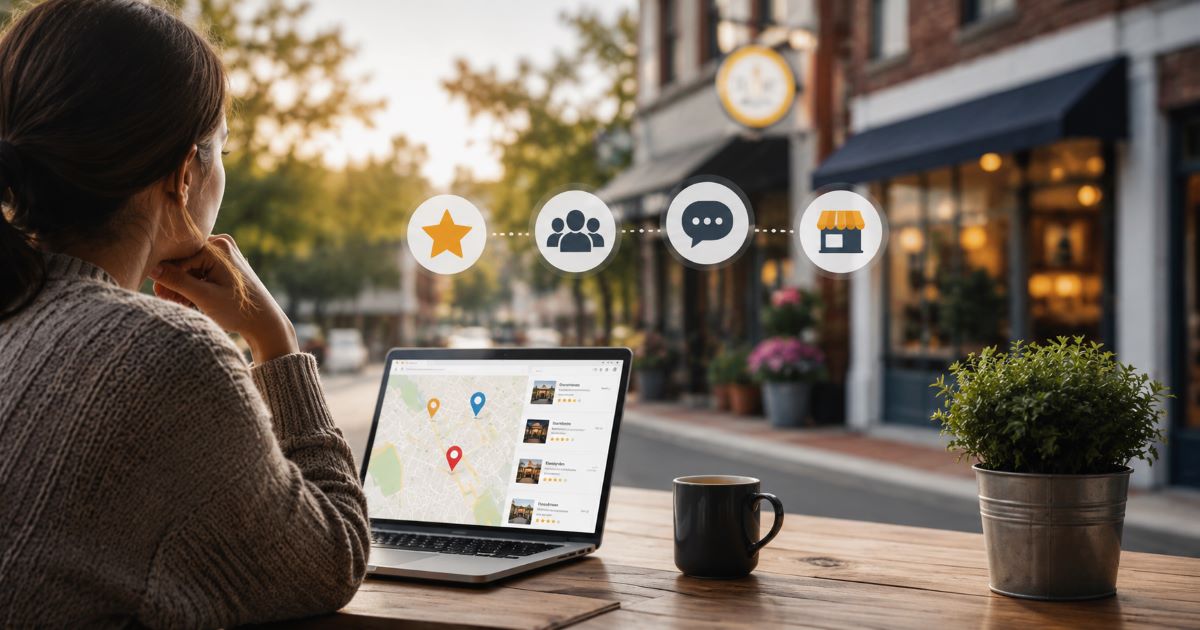
Imagine you're looking for a local electrician, dentist, café, or digital marketing agency. You search online, and within seconds, dozens of businesses appear. Most of them offer similar services, so how do you decide which one to choose?
The answer is simple—you look for signs that make one business seem more trustworthy than the others.
Today's customers rarely make decisions based on price alone. They compare reviews, browse photos, visit websites, check contact details, and even read business descriptions before making a call or requesting a quote.
For local businesses, these small details often determine whether a visitor becomes a customer—or chooses a competitor instead.
In this guide, we'll explore the key factors customers consider before choosing a local business and share practical ways to improve your online presence so your business stands out.
Why First Impressions Matter More Than Ever
Most customers form an opinion about a business within just a few seconds of finding it online.
Before they speak to you or visit your premises, they've already judged your business based on what they see online.
If your business profile is incomplete, your website looks outdated, or your contact details are difficult to find, many potential customers won't wait—they'll simply move on to another option.
On the other hand, a professional online presence instantly creates confidence and encourages people to learn more about your business.
1. Customer Reviews and Ratings
One of the first things customers notice is your reviews.
Positive reviews act as social proof, showing that real people have had a good experience with your business.
A business with dozens of genuine, recent reviews often appears more trustworthy than one with no reviews at all.
Customers don't expect perfection, but they do expect honesty. A few constructive reviews mixed with positive feedback can actually make your business seem more authentic.
Tips
Encourage happy customers to leave honest reviews.
Respond politely to both positive and negative feedback.
Never buy fake reviews.
2. A Professional Business Profile
Your business profile is often your first opportunity to introduce yourself.
Customers want to quickly understand:
What you do
Where you're located
What services you offer
How they can contact you
An incomplete profile creates uncertainty.
A complete, well-written profile shows that your business is active, professional, and ready to help.
3. High-Quality Photos
People trust what they can see.
Whether you own a restaurant, salon, retail shop, or service business, quality photos help customers feel more confident.
Include images of:
Your workplace
Products
Team members
Completed projects
Before-and-after results (where appropriate)
Avoid stock photos whenever possible. Authentic images create a much stronger impression.
4. A Clear and Easy-to-Use Website
Your website doesn't need to be complicated—but it should be easy to navigate.
Customers expect to find important information within a few clicks.
A good business website should clearly display:
Services
Pricing (where possible)
Contact information
Business hours
About Us page
Customer testimonials
If visitors struggle to find basic information, they're more likely to leave.
5. Accurate Contact Information
Nothing frustrates customers more than incorrect business information.
Imagine calling a number that no longer works or visiting a location that's permanently closed.
To avoid losing potential customers, regularly check that your:
Phone number
Email address
Website
Business address
Opening hours
are always up to date across every online platform.
6. Trust Signals
Customers naturally look for evidence that a business is reliable.
Simple trust signals include:
Years in business
Industry certifications
Professional memberships
Customer testimonials
Awards
Secure website (HTTPS)
Clear refund or service policies
These details reassure customers that they're dealing with a genuine business.
7. Fast Response Times
Customers appreciate businesses that respond quickly.
Whether someone sends an email, fills out a contact form, or requests a quote, a prompt reply creates a positive first impression.
Many customers contact multiple businesses at the same time. Often, the first helpful response wins the customer.
8. Transparent Pricing
Not every business can display fixed prices, but customers appreciate transparency.
If exact pricing isn't possible, explain:
Starting prices
Free consultations
Free quotations
Pricing process
This reduces uncertainty and encourages enquiries.
9. A Strong Online Presence
A single great website is no longer enough. Today's customers expect to find a business across multiple platforms before they trust it completely.
Google Business Profile is usually the first place customers look. It shows your location, hours, reviews, and photos directly in search results, making it one of the most powerful trust-building tools available to local businesses.
Online business directories add another layer of credibility. When a business is listed on recognised directories, it signals legitimacy and gives customers an easy way to find verified details, even if they never visit your website.
Social media allows customers to see the human side of your business—daily updates, customer interactions, and behind-the-scenes content that a website can't always capture.
Consistent branding across all these platforms—the same logo, tone, and messaging—makes a business feel established and professional rather than scattered or unreliable.
Customers naturally trust businesses that appear in multiple places online. If a business only exists on one platform, it can raise questions. But when the same business shows up on Google, in directories, and on social media, it reinforces the idea that the business is active, genuine, and here to stay.
10. Genuine Customer Testimonials
Reviews and testimonials are often used interchangeably, but they serve slightly different purposes.
Reviews are typically short, unprompted, and posted directly on third-party platforms like Google or Facebook. They feel spontaneous and are valued because customers know the business has little control over them.
Testimonials, on the other hand, are usually longer, more detailed, and often collected directly by the business—sometimes with a photo or full name attached. They tend to highlight a specific experience or result in more depth.
Both matter because they build trust in different ways. Reviews offer broad, unfiltered social proof, while testimonials provide detailed stories that help potential customers picture themselves having a similar positive experience. Using both together gives a fuller, more convincing picture of your business.
11. Consistent Business Information
Consistency might seem like a small detail, but it has a big impact on trust.
Your business name, phone number, address, and website should appear exactly the same way across every platform—your website, Google Business Profile, social media pages, and online directories.
When this information doesn't match, it creates confusion. Customers may wonder if they've found the right business, an outdated listing, or even a scam. Search engines notice inconsistencies too, which can affect how easily your business is found in local search results.
Keeping your details consistent everywhere reassures customers that they're dealing with one genuine, well-managed business—not multiple confusing versions of it.
12. Clear Call-to-Action
Even the most trustworthy business profile won't convert visitors into customers if they don't know what to do next.
Every page, profile, and listing should make it effortless for customers to:
Call your business directly
Request a quote without unnecessary steps
Book an appointment online
Send a message through a simple contact form
A clear call-to-action removes friction. When customers have to search for how to contact you, many will simply give up and choose a competitor instead. Make the next step obvious, and you'll capture far more enquiries.
Common Mistakes Businesses Make
Even well-established businesses lose customers due to avoidable mistakes, such as:
An outdated website that hasn't been updated in years
No photos, or low-quality, unprofessional images
No reviews, or very few recent reviews
Slow replies to enquiries and messages
Missing or incorrect contact details
A poor or incomplete business description
Broken website links that frustrate visitors
Each of these issues chips away at customer trust, often without the business even realising it.
Quick Checklist Before Customers Choose You
Use this checklist to see how your business measures up:
✅ Positive Reviews
✅ Professional Photos
✅ Complete Business Profile
✅ Website
✅ Correct Contact Details
✅ Fast Response
✅ Trust Signals
✅ Clear Pricing
If you can tick every box, your business is well-positioned to win customers over the competition.
Final Thoughts
Choosing a local business has become an online decision long before it becomes an offline one. Customers form judgments within seconds, based on reviews, photos, website quality, and how easy it is to get in touch. Businesses that pay attention to these details consistently win more customers than those that don't.
The good news is that none of this requires a huge budget—just consistency and attention to detail. Keeping your information accurate, responding quickly, and presenting your business professionally across every platform can make a measurable difference in how many enquiries turn into paying customers.
Customers have more choices than ever before. If you want them to choose your business, focus on creating a trustworthy online presence. Small improvements—such as keeping your business information up to date, collecting genuine reviews, showcasing quality photos, and maintaining a complete profile on trusted platforms like UKBizNetwork—can make a significant difference in attracting new customers.
Frequently Asked Questions
Share this post
Comments (0)
No comments yet. Be the first to comment!